
⏱︎
Read time:
3–4 minutes
⏱︎
Read time:
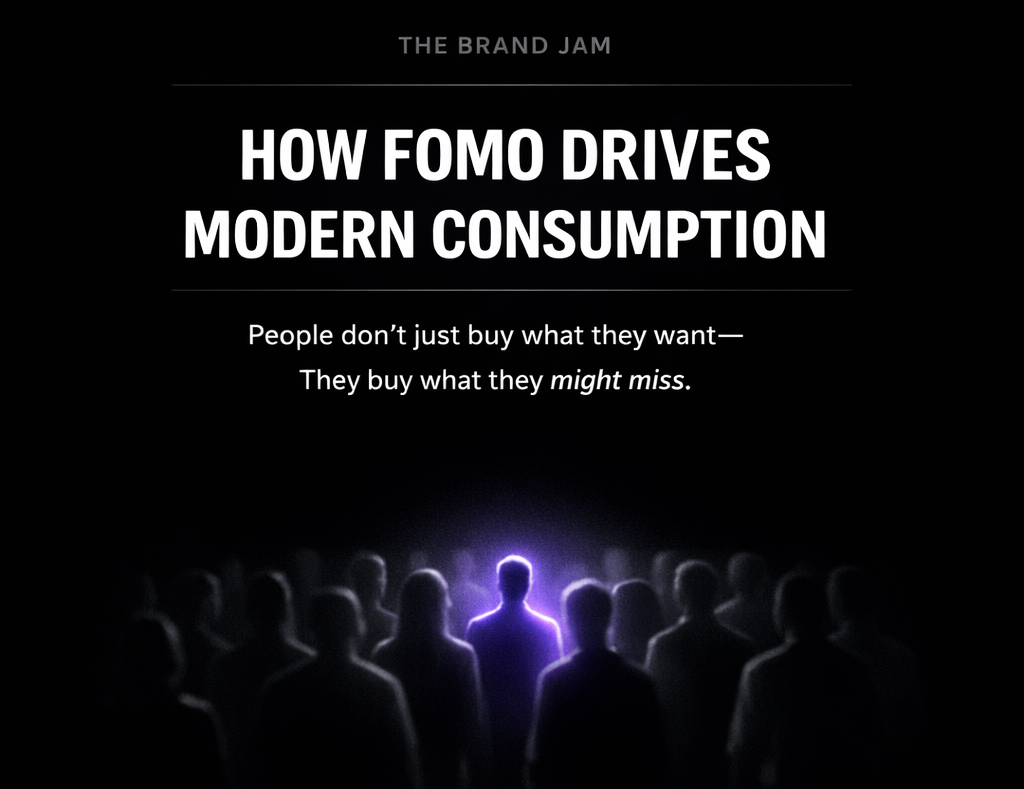
There is a trend that I’ve been noticing whenever there is an announcement about something new, such as a product release, a concert, or a sale. At first people will express interest, but then the interest starts to grow as they talk about it, post about it, or buy it. At that point, FOMO sets in, and a feeling occurs in people that if they don’t act quickly, they will miss out on what is being offered.
We buy based on wanting to have something, but in many cases the reason we buy is not to want something; instead, we are driven to act because we see others who are purchasing a similar item, we start to think we should also get something.
I’ve personally experienced FOMO too – I’d never cared about this thing until now, and once I see it everywhere, it becomes important to me through my social circle.
How Brands Turn FOMO Into a Strategy
FOMO isn’t accidental anymore. Brands are now purposefully creating a feeling of urgency amongst their consumers.
Some examples of this are:
Limited drops → “Available only this week.”
Scarcity signals → “Only 3 left in stock.”
Time pressure → “Sale ends tonight.”
Exclusivity → “Invite-only access.”
All of these techniques create urgency for consumers to purchase. These strategies are designed to create a shift in the mindset of the consumer from “Should I purchase this?” to “What happens if I miss out?”
The way you think of buying is now two different mindsets.
The Concert Effect
For many people, they truly enjoy the music of their favourite artist and want to attend their concerts to see them perform live. However, there are many people who are attending that concert solely because:
I know a ton of people who don’t listen to the artist at all, yet rush to buy tickets as a matter of importance, not absolute love for the artist.
Now zoom out.
This is not just concert going that has this type of mentality. This exact mentality applies to things like:
The only thing that changes is the context. The way the mind thinks does not change.
Social Media Multiplies FOMO
Earlier, FOMO was limited.
That isn’t true anymore.
Because everything is visible.
In real time.
You don’t hear about someone doing something –
You see that person actually doing it –
Therefore, a cycle is created –
You do something → You share → Other people see it → Other people feel they are missing out → Therefore they do it too.
This is very powerful to businesses.
Businesses not only have customers who buy their products, Businesses also sell products through the way people share products and services.
There are two components that result in a purchase:
Attention alone doesn’t drive sales. But adding FOMO creates a level of Urgency!
Without adding FOMO to a customer’s Want for a product or service they will delay the purchase.
“This might be something I want. I can look at it later.”
With FOMO a customer will:
“I need to buy this now!”
That’s the difference.
It shortens decision making.
It reduces overthinking.
It increases action.
FOMO works even better today because:
It is more than just owning something today.
It is about being part of something.
Businesses that capitalize on FOMO will create moments that you do not want to miss.
The Brand Jam Takeaway
FOMO is now more than just an emotion, it has become a lever for growth.
Top brands not only provide value but also supply urgency, visibility, and social proof with regard to that value.
Today’s world of commerce creates new purchasing opportunities and desires to purchase beyond the capacity of potential consumers.
As a result, modern consumption is driven by the fear of missing out.

Leave a Reply