

⏱︎
Read time:
2–3 minutes
⏱︎
Read time:
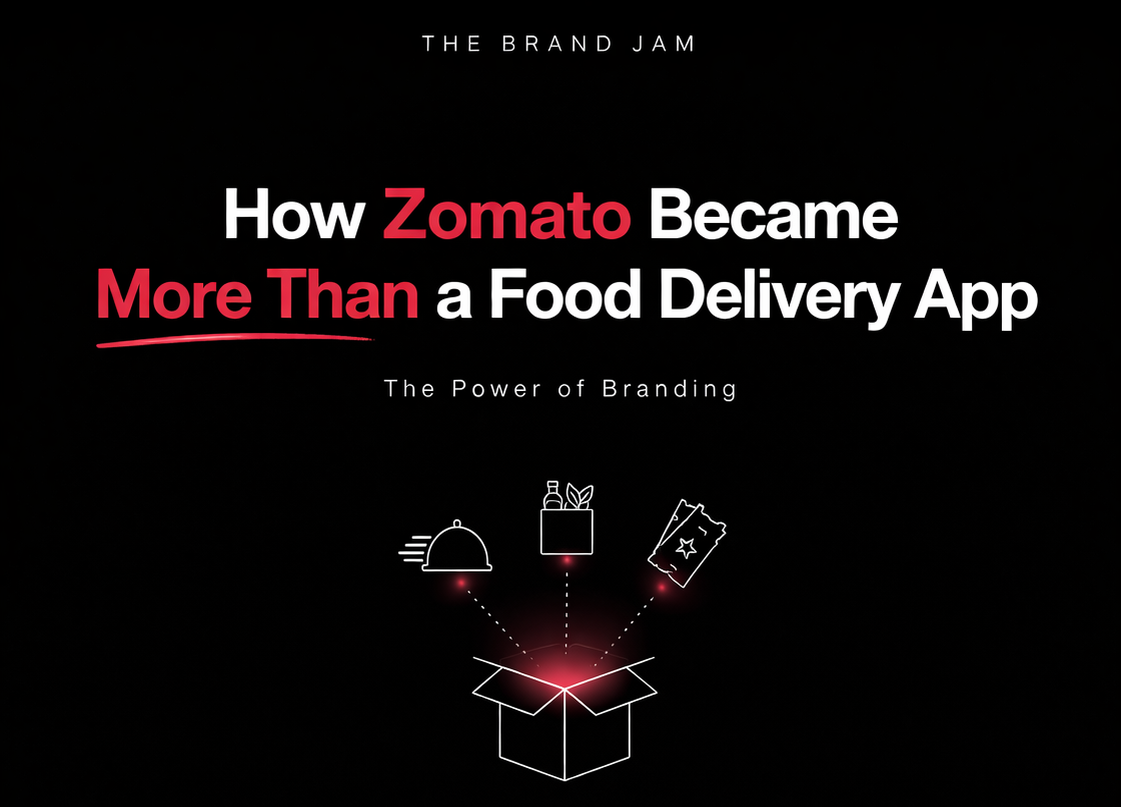
Most people think Zomato won because of food delivery.
Speed.
Convenience.
Options.
That’s the obvious answer.
I thought the same too, until I started noticing how often Zomato showed up even when I wasn’t ordering food.
That’s when it started to feel like something more was going on.
Most apps communicate like machines.
“Order confirmed.”
“Delivery arriving.”
Zomato didn’t.
“Your kitchen called. It’s tired.”
“You’re not hungry. You’re just bored.”
Same function. Completely different feeling.
These weren’t just updates anymore.
They were tiny pieces of content.
And over time, that changes how you see the app.
You don’t just use it.
You start noticing it.
The same pattern shows up on social media.
Zomato doesn’t behave like a company trying to sell.
It behaves like something you’d follow anyway.
Nothing feels overdesigned.
And that’s the key.
It earns attention instead of chasing it.
Once attention is there, expansion becomes easier.
And Zomato expands, but not randomly.
Different services on the surface.
But all sitting around the same core — food consumption.
That’s when it clicks.
This isn’t feature expansion.
It’s ecosystem building.
The interesting shift is what comes next.
With District, Zomato moves beyond delivery.
Now it’s part of planning your day:
It’s no longer just solving hunger.
It’s stepping into how people spend their time.
From “what should I eat”
to “what should I do”
That’s a much bigger space.
Looking at it end to end, nothing Zomato did feels accidental.
It:
I didn’t realise this in one go.
But once you see it, it’s hard to unsee.
Zomato didn’t just win by being useful.
It won by being present in small, consistent ways.
In notifications.
On social media.
Across different parts of the same journey.
That’s what turns an app into something bigger.
Most brands try to grow by adding features.
Zomato grew by becoming something people don’t mind interacting with, even when they’re not buying.

Leave a Reply