

⏱︎
Read time:
3–4 minutes
⏱︎
Read time:
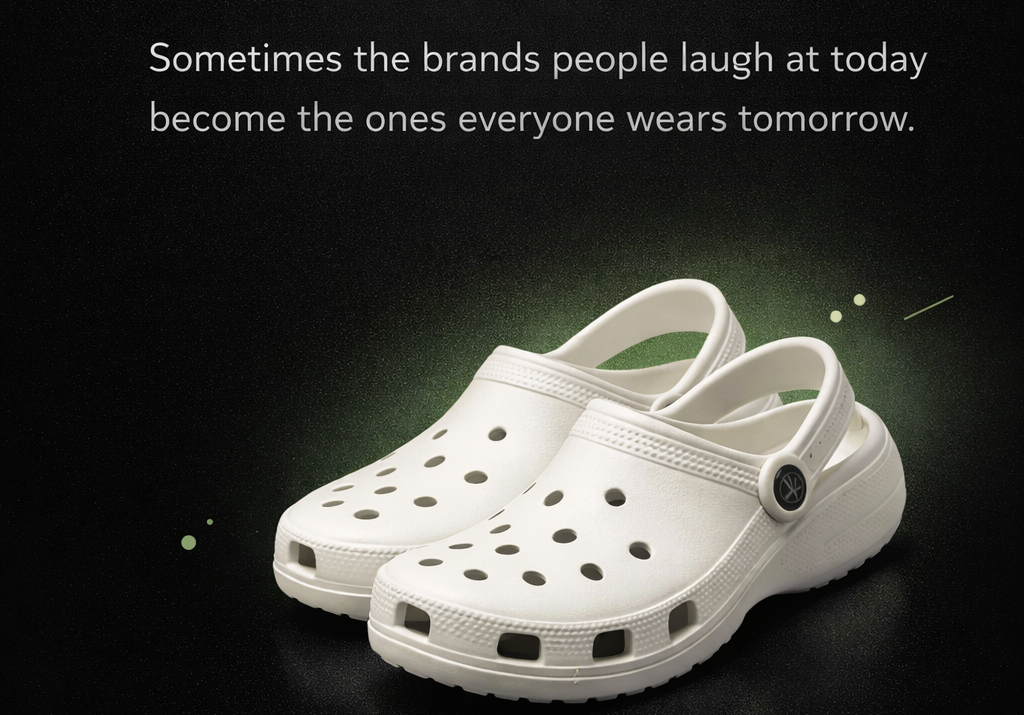
There was a time when I wouldn’t have guessed Crocs would become popular among Gen-Z.
For a long time, Crocs had a reputation.
They were comfortable.
They were useful.
But they were also generally considered to be ugly. In fact, Crocs became the punchline of many fashion jokes on the internet. They were associated with gardeners, medical staff and dads on vacation.
They were not something generally found in discussions about trendy sneakers. Yet Crocs managed to pull off one of the most unexpected comebacks in modern fashion and that’s what makes this story interesting to me.
So what changed?
Most brands that get labeled ugly try hard to fix that.
They redesign products.
They make them sleeker.
They try to look more fashionable.
Crocs took a completely different approach and personally, I think this is where everything started to shift.
They embraced their criticism instead of fighting them.
The brand embraced their shoes’ unusual look. They let the internet to joke, and in a strange way, that honesty worked in their favor.
With fashion evolving into more experimental and expressive styles, the chunky, large look of Crocs was no longer out of place at all.
Another huge contributor to Crocs success was internet culture.
Memes, viral trends, and social media celebrate anything odd and unexpected, and when viewed from this perspective Crocs actually makes sense.
Crocs didn’t try to fit in with other shoe brands and thus are easily identifiable without a logo.
For many Gen Zs, the point of fashion is not to have the perfect look but rather to express their individuality, being playful, and in some cases be ironically humorous.
Crocs fit this mentality perfectly.
In my opinion, Crocs’ partnership with artists, designers, and celebrities was one of their best ideas.
Not only did they work with well established stars and designers who have large, loyal fan bases, but they also worked with cultural influencers.
This made their shoes more relevant to fans right away.
And by creating limited editions, Crocs developed excitement and encouraged fans to buy them for reasons beyond comfort.
At that point, Crocs moved from being footwear to being part of popular culture.
Another detail I find really interesting is customization.
Jibbitz were another great feature that Crocs gave customers to personalize their shoes.
Allowing customers to customize their shoes with symbols, cartoons, and designs that represented the individual was an awesome way for Gen Z to feel a greater sense of ownership.
In reality, customers want to do more than just wear something, they want to be able to put their own stamps on it, and Crocs established themselves as the easiest way to accomplish that.
For years, fashion often forced people to choose between style and comfort.
Crocs challenged that idea, and I think timing played a huge role here.
The pandemic began favoring a relaxed approach to fashion, which made comfort the starting point for all fashions and Crocs were made to be built around comfort: Previously defined as being ‘uncool’, Crocs are now considered to be relevant.
What I find most fascinating about Crocs is the lesson it offers.
Sometimes, the smartest strategy isn’t trying to be perfect.
It’s about being real, embracing what makes you different, and allowing culture to evolve around you instead of chasing it.
Crocs was once a joke, now people are honestly enjoying wearing Crocs.
And to me, that’s what makes the rise of Crocs such a powerful comeback story.
In today’s internet driven world, even the most unlikely brands can become cool again, you just have to play the game differently.

Leave a Reply